Switchgear sits behind the quiet reliability of factories, hospitals, data centers, and rail networks. It controls, protects, and isolates electrical equipment when normal operation fails. The question, “what are the different types of switchgear,” matters because voltage, fault current, installation space, and maintenance access change every buying decision.
The International Energy Agency’s Electricity Grids and Secure Energy Transitions report estimates that annual grid investment must rise above USD 600 billion by 2030. That pressure is increasing demand for dependable medium- and high-voltage equipment. MarketsandMarkets also projects continued growth in the global switchgear market, driven by renewable integration, industrial expansion, and grid modernization. These figures provide direction, not a perfect purchasing answer. Market estimates differ.
John D. McDonald, an IEEE Fellow and recognized power-system authority, states, “Protection is not an option; it is a fundamental requirement of a power system.” This principle should guide every specification. Buyers must compare air-insulated, gas-insulated, hybrid, low-voltage, medium-voltage, and high-voltage switchgear. Arc-flash performance, IEC 62271 compliance, enclosure ratings, short-circuit capacity, and after-sales support deserve equal attention. A compact GIS panel may suit a crowded urban substation, while AIS can simplify inspection in a spacious plant. The cheaper option may create higher maintenance costs later. That part is often underestimated.
This guide, “7 Switchgear Types and Buying Tips for Global Buyers,” connects technical categories with practical procurement questions. It examines certification documents, factory testing, spare-part access, delivery conditions, and supplier experience. Specifications look convincing on paper. Field conditions can disagree. Therefore, careful verification remains essential.
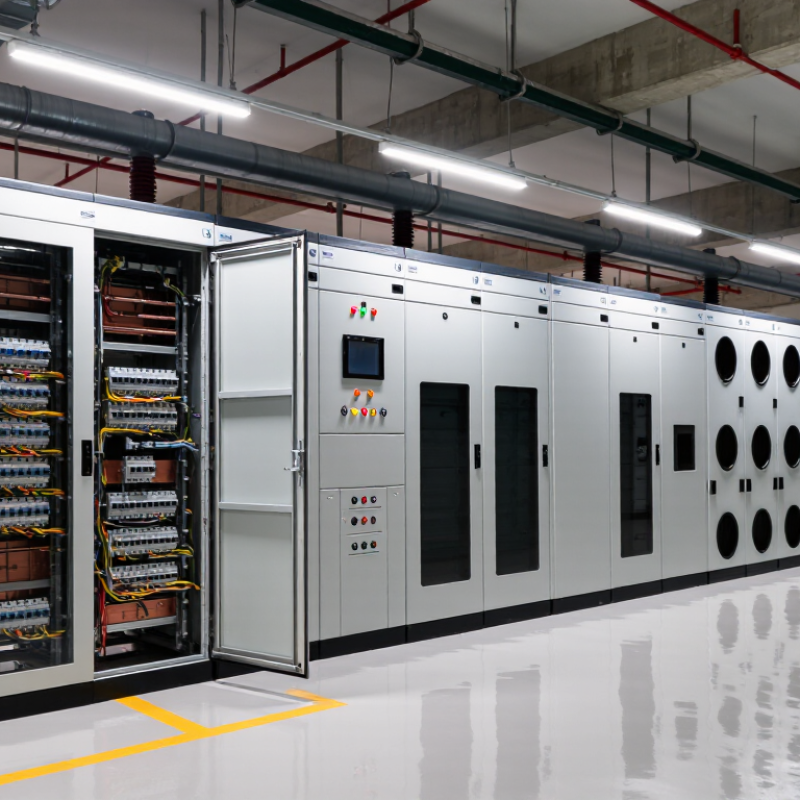
Switchgear protects, controls, and isolates electrical circuits. It works through coordinated components, not a single device. A circuit breaker interrupts fault current when a relay detects abnormal conditions. Busbars distribute power, while disconnectors create visible isolation for maintenance. Arc chutes or vacuum chambers help extinguish dangerous arcs. Interlocking systems reduce incorrect switching, although human error remains possible.
Common switchgear types include air-insulated, gas-insulated, vacuum, oil, low-voltage, medium-voltage, and high-voltage switchgear. Air-insulated units suit many indoor and outdoor substations. Gas-insulated designs save space but require careful sealing and environmental review. Vacuum breakers perform well in medium-voltage networks. Oil systems still appear in some installations, but maintenance demands closer attention. The correct type depends on voltage, fault level, climate, available space, and operating habits. A catalogue rating should not be treated as the final answer.
Tips: Confirm rated voltage, continuous current, short-circuit withstand, protection settings, and enclosure rating. Check whether the equipment meets applicable IEC or IEEE requirements and local grid rules. Ask for routine test records, type-test evidence, wiring diagrams, and a clear spare-parts list. For coastal or dusty sites, inspect corrosion protection and ingress protection carefully. Also review altitude and temperature derating. These details are easy to miss. Site data may be incomplete, so qualified engineers should verify the design before purchase. Cost matters, but service access, training, and replacement time often matter more.
Switchgear selection begins with the installation environment, not only the voltage rating. Air-insulated switchgear uses open air for insulation and suits indoor substations, factories, and utility distribution rooms. Gas-insulated switchgear is compact and enclosed, making it useful where land is expensive or pollution is severe. It costs more and requires trained service teams.
Metal-clad switchgear separates compartments with grounded metal barriers. It is common in medium-voltage plants, data centers, and critical commercial buildings.
Metal-enclosed switchgear offers simpler protection for distribution equipment, though its internal separation may be less extensive. Vacuum switchgear interrupts current inside sealed vacuum bottles and performs well in frequent switching applications. Oil switchgear uses insulating oil for interruption and insulation, but maintenance, fire planning, and environmental controls need careful review. Hybrid switchgear combines technologies, often reducing footprint while retaining selected air-insulated sections.
The boundary between categories is not always tidy. In field inspections, I have seen buyers compare names while overlooking humidity, altitude, cable access, and spare-part availability.
Ring main units are also widely used for compact medium-voltage networks, especially in commercial buildings and renewable-energy sites.
Check short-circuit withstand ratings, insulation levels, enclosure protection, and local testing requirements. Ask for clear drawings and routine-test records. Confirm whether technicians can safely isolate each compartment.
A cheaper unit can become expensive when tools, training, and replacement parts are unavailable. That lesson is easy to miss.
Comparing low-, medium-, and high-voltage switchgear starts with the system, not the catalog. Low-voltage equipment usually serves circuits below 1,000 volts, such as factory feeders and building distribution boards. Medium-voltage gear commonly covers 1–36 kV, while high-voltage systems operate above that range. Exact boundaries vary by local standards, so buyers should verify the grid code before requesting quotations.
Seven common switchgear types include air-insulated, gas-insulated, metal-enclosed, metal-clad, vacuum, oil-insulated, and hybrid designs. Air-insulated units are easier to inspect and often suit indoor industrial rooms. Gas-insulated equipment saves space, but servicing requires trained technicians and controlled gas handling. Vacuum breakers perform well in medium-voltage networks with frequent switching. Oil systems can offer strong insulation, yet spill control and fire planning increase site requirements.
Do not compare price alone. Check rated voltage, continuous current, short-circuit withstand, insulation level, and protection functions. A 12 kV panel with a 25 kA rating may be unsuitable for a fault level above 31.5 kA. Measure the room doorway, cable trench, and maintenance clearance. Small details matter. Ask for routine-test reports, type-test evidence, drawings, spare-parts data, and a clear warranty scope. Confirm compliance with applicable IEC or IEEE requirements and local certification rules. A cheaper quote can become expensive after delivery. Procurement teams sometimes overlook humidity, altitude, salt air, or limited local service. That mistake deserves a second review.
How to compare low-, medium-, and high-voltage switchgear
| Switchgear type | Typical use | What to compare before buying |
|---|---|---|
| Low-voltage switchboard | Commercial buildings and industrial distribution | Rated current, short-circuit withstand, enclosure protection, IEC 61439 compliance |
| Metal-enclosed medium-voltage switchgear | Factories, utilities, and substations | Rated voltage, interrupting current, insulation level, internal arc classification |
| Ring main unit | Compact medium-voltage distribution networks | Load-break rating, fault protection, automation, footprint, cable interfaces |
| Gas-insulated switchgear | Space-constrained substations | Gas management, environmental requirements, maintenance access, lifecycle cost |
| Air-insulated switchgear | Indoor and outdoor substations | Clearance requirements, climate suitability, corrosion protection, serviceability |
| Outdoor high-voltage switchyard equipment | Transmission substations and grid interconnections | Lightning impulse withstand, creepage distance, seismic and wind loads, altitude correction |
| Hybrid switchgear | Substations requiring compactness and conventional air clearances | Configuration flexibility, inspection requirements, switching sequence, spare parts |
For global procurement, confirm the local frequency, rated voltage, continuous current, short-circuit rating, power-frequency withstand, impulse withstand, installation altitude, ambient temperature, ingress protection, control voltage, certification, testing documents, and after-sales service requirements before comparing quotations.
Global switchgear demand is expanding with grid upgrades and industrial electrification. Grand View Research estimated the global switchgear market at about USD 97.4 billion in 2023. Its report forecasts continued growth through 2030. Buyers should compare specifications, not only prices.
Check rated voltage, continuous current, short-circuit withstand, and frequency. Confirm insulation levels for the installation altitude. For medium-voltage equipment, IEC 62271-200 covers metal-enclosed switchgear and internal arc classification. IEC 60529 defines enclosure protection ratings, such as IP54. Low-voltage assemblies should meet IEC 61439 requirements. In some markets, IEEE C37.20.2 may also apply. Ask for routine test records, type-test evidence, and temperature-rise results. A missing certificate is a warning sign. Sometimes, the paperwork looks complete but lacks test conditions.
Tips: Match the breaking capacity to the highest available fault current. Check cable entry space with the actual cable diameter. Verify mechanical interlocks during a site inspection. Review spare-part availability and maintenance access. Do not treat arc-flash protection as an optional feature. The International Energy Agency reported that global electricity demand increased by about 4% in 2024. More connected loads can raise fault levels. Buyers should reassess protection coordination after future expansion. One detail is often overlooked: condensation control inside outdoor enclosures. Inspectors should record it.
| No. | Switchgear Type | Typical Voltage Class | Insulation and Construction | Typical Switching or Protection Devices | Common Applications | Key Specifications to Compare | Relevant International Standards | Important Buying and Safety Checks |
|---|---|---|---|---|---|---|---|---|
| 1 |
Low-Voltage Switchboard
LV
Indoor / Outdoor
|
Up to 1,000 V AC or 1,500 V DC, depending on the assembly design | Air-insulated, metal-enclosed assembly with segregated or non-segregated functional units | Air circuit breakers, molded-case circuit breakers, miniature circuit breakers, fuses, contactors and residual-current devices | Commercial buildings, industrial plants, data centers, infrastructure facilities and distribution boards | Rated current; rated short-time withstand current; rated peak withstand current; short-circuit withstand duration; busbar arrangement; form of internal separation; ingress protection; temperature-rise performance; cable-entry layout | IEC 61439-1 and IEC 61439-2; IEC 60947-2 for circuit breakers; IEC 60529 for IP ratings | Confirm assembly verification, fault rating at the installation point, neutral and protective-conductor sizing, arc-flash risk controls, clearances, earthing continuity, access protection and compatibility with the local electrical code |
| 2 |
Metal-Enclosed Medium-Voltage AIS
MV
Air-Insulated
|
Commonly above 1 kV to 36 kV; exact ratings vary by network and design | Grounded metal-enclosed compartments using air as the primary insulation medium | Withdrawable or fixed vacuum circuit breakers, load-break switches, earthing switches, current transformers and voltage transformers | Utility substations, factories, renewable-energy plants, commercial facilities and primary or secondary distribution systems | Rated voltage; rated normal current; rated short-circuit breaking current; rated short-time withstand current; power-frequency withstand voltage; lightning impulse withstand voltage; busbar rating; protection and control interfaces; internal arc classification | IEC 62271-200; IEC 62271-100 for AC circuit breakers; IEC 62271-102 for disconnectors and earthing switches; IEC 60529 for enclosure protection | Check internal arc classification and test accessibility, interlocking between breaker, disconnector and earth switch, breaker duty cycle, cable-compartment access, relay compatibility, partial-discharge requirements and maintenance clearances |
| 3 |
Gas-Insulated Switchgear
GIS
Compact
|
Typically medium voltage through high voltage; many installations use 12 kV to 245 kV classes | Sealed metal enclosure with gas insulation; designs may use SF6 or alternative gases with lower environmental impact | Gas-insulated circuit breakers, disconnectors, earthing switches, instrument transformers and gas monitoring systems | Urban substations, offshore platforms, industrial sites, densely populated areas and locations with limited space or severe environmental exposure | Rated voltage; rated current; short-circuit rating; gas type and filling pressure; leakage rate; compartment arrangement; gas monitoring; partial-discharge level; seismic qualification; installation footprint; end-of-life gas recovery provisions | IEC 62271-203 for AC gas-insulated metal-enclosed switchgear above 52 kV; IEC 62271-200 for applicable MV metal-enclosed assemblies; IEC 62271-100 for circuit breakers | Request verified gas-handling procedures, leakage and pressure-monitoring data, environmental declaration where applicable, factory acceptance-test records, transport limitations, gas recovery requirements and a long-term service plan |
| 4 |
Ring Main Unit
RMU
Secondary Distribution
|
Commonly 6 kV to 24 kV, with other medium-voltage ratings available | Compact metal-enclosed unit, either air-insulated or gas-insulated, designed for ring-network operation | Load-break switches, circuit breakers, fuses, earthing switches, voltage indicators and optional motorized operating mechanisms | Urban distribution networks, commercial buildings, apartment complexes, wind and solar collection systems and compact substations | Ring and transformer-feeder configuration; rated current; short-circuit withstand; fault-indicator type; cable-interface compatibility; switch-fuse coordination; automation protocol; remote-control capability; enclosure IP rating | IEC 62271-200; IEC 62271-103 for switches; IEC 62271-105 for switch-fuse combinations; IEC 62271-102 for earthing switches | Verify cable connector interface, phase and voltage indication, visible or reliable earth position indication, mechanical interlocking, fuse coordination, pressure or gas monitoring, remote terminal-unit compatibility and safe cable-test access |
| 5 |
Outdoor Air-Insulated High-Voltage Switchgear
HV
Outdoor AIS
|
Above 52 kV in many transmission and sub-transmission applications | Open-air insulation using porcelain or composite insulators, steel structures and outdoor-rated equipment | High-voltage circuit breakers, disconnectors, earthing switches, current transformers, voltage transformers and surge arresters | Transmission substations, utility switching stations, large renewable-energy interconnections and industrial high-voltage substations | Highest system voltage; rated lightning impulse withstand voltage; rated switching impulse withstand voltage where applicable; rated short-circuit current; creepage distance; pollution level; mechanical endurance; seismic and wind loads; altitude correction | IEC 62271-1; IEC 62271-100; IEC 62271-102; IEC 60815 for selection of insulators under polluted conditions; IEC 60099-4 for metal-oxide surge arresters | Evaluate insulation coordination, environmental and pollution class, minimum phase-to-earth and phase-to-phase clearances, lightning protection, earthing-grid design, corrosion protection, operating mechanism reliability and site-specific seismic and wind conditions |
| 6 |
Load-Break Switchgear and Switch-Fuse Unit
MV
Transformer Protection
|
Commonly 3.6 kV to 36 kV, depending on the switch and fuse system | Air-insulated or gas-insulated metal-enclosed assembly with a switch capable of interrupting specified load currents | Load-break switch, high-voltage current-limiting fuses, earthing switch and optional trip mechanism | Distribution transformers, compact substations, motor feeders and medium-voltage branch circuits where fault levels are within the fuse capability | Rated load-break current; fuse type and rating; transformer inrush tolerance; transfer current; short-circuit withstand; fuse-switch coordination; thermal rating; mechanical endurance; auxiliary contacts | IEC 62271-103 for switches; IEC 62271-105 for switch-fuse combinations; IEC 60282-1 for high-voltage current-limiting fuses | Confirm fuse let-through energy, transformer protection coordination, three-phase fuse replacement requirements, striker-pin operation, fault-indicator behavior, earthing interlock, spare-fuse availability and safe isolation procedures |
| 7 |
DC Switchgear and Battery Distribution Panel
DC
Energy Storage
|
Typical systems include 24 V, 48 V, 110 V, 220 V or 1,500 V DC; the applicable range depends on the installation | Insulated or metal-enclosed DC assembly designed to control and protect battery, rectifier, photovoltaic or industrial DC circuits | DC circuit breakers, fuses, contactors, disconnectors, pre-charge circuits, insulation-monitoring devices and shunt or Hall-effect current sensors | Substation control power, telecommunications, UPS systems, battery energy storage, photovoltaic arrays, rail systems and industrial automation | Continuous current; DC voltage; prospective short-circuit current; polarity and isolation requirements; interrupting capacity at the specified time constant; battery fault contribution; insulation resistance; reverse-current protection; thermal derating | IEC 61439-1 and IEC 61439-2 for applicable assemblies; IEC 60947-2 for circuit breakers; IEC 60269-1 and relevant parts for fuses; IEC 62477-1 for power electronic converter system safety where applicable | Use devices specifically tested for DC interruption, verify polarity and arc-extinction performance, assess battery short-circuit current, provide touch-safe barriers, check insulation monitoring and emergency isolation, and confirm compatibility with the battery chemistry and energy-management system |
Market categories often include air-insulated, gas-insulated, vacuum, metal-clad, metal-enclosed, load-break, and hybrid switchgear. Each suits different voltage levels, space limits, maintenance plans, and safety requirements. Buyers should verify short-circuit ratings, insulation levels, enclosure protection, and arc-resistance performance. These details matter more than attractive photographs or polished product sheets.
Quality evidence should include type-test reports, routine-test records, material traceability, and clear manufacturing procedures. Ask whether tests match the proposed configuration, not merely a similar model. Compliance also requires careful checking. IEC or IEEE references may apply, but local grid rules and certification requirements can differ. Confirm documentation before production. A missing certificate can delay customs, installation, or energization.
Buying tips: Compare total ownership cost, including transport, commissioning, spare parts, training, and planned maintenance. Request a detailed bill of materials and realistic delivery schedule. Inspect factory quality controls when possible, or appoint an independent inspector. Do not choose solely by the lowest quote. In practice, a cheaper panel may require costly adaptations later. Even experienced buyers can overlook climate conditions, such as salt air, dust, heat, or condensation. That is worth reviewing twice.
Switchgear protects, controls, and isolates electrical circuits. A breaker interrupts fault current after a relay detects abnormal conditions. Busbars distribute power. Disconnectors create visible isolation for maintenance. Human error remains possible.
A relay identifies unusual current or voltage conditions. The breaker then opens the circuit quickly. Arc chutes or sealed vacuum chambers help extinguish the electrical arc. Timing matters.
Gas-insulated equipment saves space with enclosed components. It can suit crowded substations or polluted locations. However, sealing and environmental checks require trained service teams. Compact is not always simpler.
Air-insulated equipment suits many indoor substations, factories, and outdoor distribution rooms. It usually provides accessible components and familiar maintenance procedures. The design needs enough clearance around live sections. Space matters.
Check rated voltage, continuous current, frequency, and short-circuit withstand. Confirm insulation levels for the installation altitude. Review enclosure protection, temperature limits, and future fault levels. A catalogue rating is not the final answer.
Humidity, dust, salt air, altitude, and temperature can change equipment performance. Coastal sites need strong corrosion protection. Outdoor enclosures need condensation control and suitable ingress protection. Site data may be incomplete.
Request wiring diagrams, routine-test records, and type-test evidence. Ask for temperature-rise results and a clear spare-parts list. Check the test conditions, not only the certificate title. Paperwork can mislead.
Verify mechanical interlocks during a site inspection. Confirm technicians can isolate each compartment safely. Review cable entry space using the actual cable diameter. Training, tools, and replacement time affect total cost. I might underestimate these details.
Switchgear is a coordinated system of electrical devices used to control, protect, isolate, and distribute power. It works by directing current during normal operation and quickly interrupting abnormal conditions such as overloads, short circuits, or equipment faults. Understanding what are the different types of switchgear helps buyers select the right solution for each application. The seven main categories commonly include low-voltage, medium-voltage, high-voltage, air-insulated, gas-insulated, metal-enclosed, and outdoor switchgear, each suited to different facilities, environments, and operating requirements.
When comparing products, global buyers should evaluate voltage ratings, current capacity, short-circuit withstand strength, insulation performance, enclosure protection, switching mechanisms, maintenance needs, and installation conditions. Safety certifications, testing procedures, environmental requirements, and local grid regulations are equally important. A practical purchasing decision should balance initial cost with energy efficiency, service life, reliability, spare-parts availability, delivery capability, and technical support. Careful specification review and supplier qualification can reduce project risks while ensuring safe, compliant, and dependable power distribution.

Zago Electric