Switchgear is becoming a critical control point as electricity systems grow more complex. The IEA’s Electricity 2024 report projects global electricity demand will increase by an average of 3.4% annually from 2024 to 2026. More demand means greater pressure on substations, factories, data centers, and renewable energy connections. It also exposes weak equipment faster.
This guide compares major 2026 switchgear types, including air-insulated switchgear, gas-insulated switchgear, hybrid systems, and low-voltage assemblies. Each design has practical trade-offs. AIS usually offers easier inspection and lower initial cost. GIS saves space but requires stricter manufacturing control and specialized maintenance. IEC 62271 and IEC 61439 provide important benchmarks for medium-voltage and low-voltage equipment. However, compliance alone does not prove consistent factory quality.
So, how should buyers make a reliable decision? The central question is how to evaluate switchgear quality before purchasing. Professional evaluation should examine rated voltage, short-circuit withstand, temperature rise, enclosure protection, insulation performance, mechanical endurance, and factory test records. The IEA’s Electricity Grids and Secure Energy Transitions report also highlights the need for stronger, more flexible grids, making lifecycle reliability increasingly important. Look closely at busbar joints, door seals, interlocks, cable compartments, and nameplate accuracy. Small details matter.
A perfect checklist does not exist. Even experienced teams can miss installation conditions or maintenance weaknesses. Quality should therefore be verified through documented type tests, routine tests, supplier audits, reference projects, and realistic service planning. The cheapest quotation may remain expensive after one preventable failure.
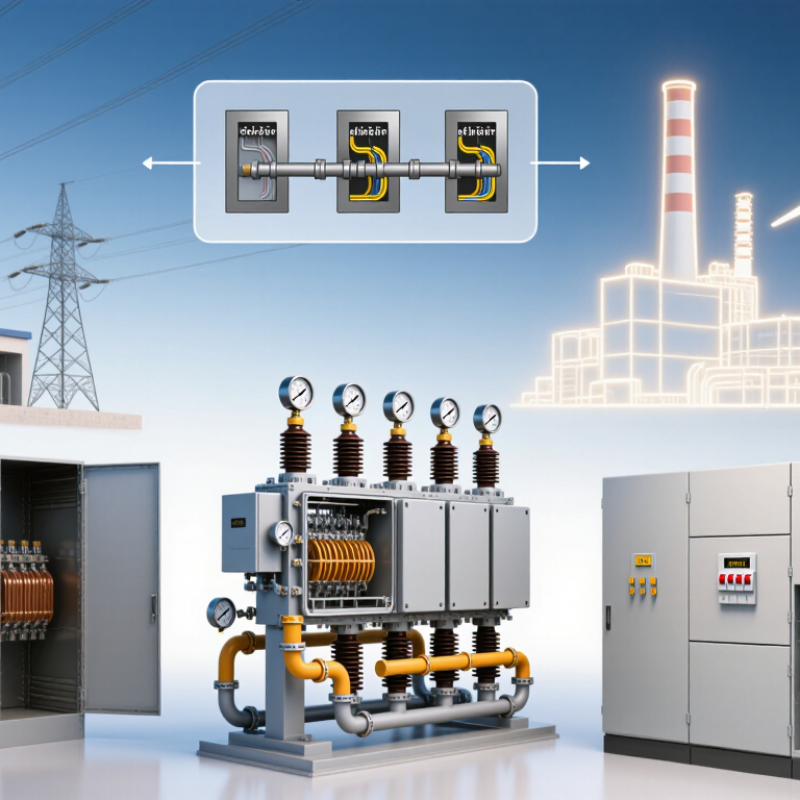
2026 Top Switchgear Types: How to Evaluate Quality?
Classify 2026 switchgear by IEC voltage classes. Low-voltage switchgear operates at or below 1 kV AC under IEC 60947. Medium-voltage equipment usually covers above 1 kV and up to 52 kV under IEC 62271 practices. The distinction affects insulation, fault withstand, testing, and maintenance access. It is not just a label.
Demand is becoming less forgiving. The IEA Electricity 2024 report forecasts global electricity demand growth of about 4% annually through 2026. More feeders, substations, and industrial loads will increase switching cycles. For LV systems, check rated current, short-circuit capacity, temperature rise, IP protection, and mechanical endurance. For MV systems, inspect dielectric withstand, internal arc classification, interlocks, cable compartments, and partial-discharge control.
Look beyond the enclosure.
A reliable evaluation needs type-test evidence, routine-test records, verified material traceability, and clear maintenance instructions. IEC 62271-200 testing can reveal weaknesses in metal-enclosed MV assemblies during internal arcing. Field experience also matters: loose connections, poor shutters, and blocked ventilation often create failures before the main insulation does. CIGRE technical guidance on switchgear reliability repeatedly emphasizes testing, condition monitoring, and lifecycle maintenance. A polished panel proves little. Some specifications still overvalue appearance and undervalue repair access. That deserves a second review.
Practical comparison of low-voltage and medium-voltage switchgear based on IEC voltage classes, construction, performance ratings, testing, and quality indicators.
| IEC Voltage Class | Typical Switchgear Type | Rated Voltage Range | Primary IEC Reference | Key Quality Parameters | Recommended Verification | Typical Applications |
|---|---|---|---|---|---|---|
| LV: ≤ 1 kV AC | Power distribution switchboard | Up to 1,000 V AC; commonly 400–690 V AC | IEC 61439-1 and the applicable product standard in the IEC 61439 series |
Rated current: commonly 630–6,300 A Short-circuit withstand: verify Icw and Ipk Temperature-rise performance, insulation coordination, clearances, creepage distances, and enclosure integrity |
Design verification and routine verification under IEC 61439; confirm temperature-rise, dielectric, protective-circuit continuity, and functional tests | Commercial buildings, factories, data centers, infrastructure, and utility distribution rooms |
| LV: ≤ 1 kV AC | Motor control center and motor starter assembly | Typically 400–690 V AC | IEC 61439; IEC 60947-1; IEC 60947-4-1 for electromechanical contactors and motor starters | Motor coordination type, overload protection, short-circuit protective device coordination, contactor endurance, thermal stability, and fault containment | Check coordination documentation, overload-trip settings, short-circuit tests or verified combinations, dielectric strength, and mechanical operation | Process plants, pumping stations, HVAC systems, conveyors, and production lines |
| LV: ≤ 1 kV AC | Withdrawable LV switchboard | Commonly 400–690 V AC | IEC 61439-1 and relevant IEC 61439 product requirements | Safe isolation, service-position interlocking, plug-in contact reliability, segregation form, arc-flash risk reduction, and maintainability | Verify interlocks, racking operation, position indication, contact resistance, dielectric withstand, temperature rise, and repeated insertion performance | Critical power systems, data centers, hospitals, airports, and high-availability industrial facilities |
| LV: ≤ 1 kV AC | Enclosed LV circuit-breaker panel | Up to 1,000 V AC | IEC 60947-2 for circuit-breakers; IEC 61439 for assemblies | Rated ultimate short-circuit breaking capacity (Icu), service short-circuit breaking capacity (Ics), trip accuracy, electrical endurance, and selectivity | Confirm test certificates, protection settings, breaking-capacity ratings at the installation voltage, insulation resistance, and routine functional tests | Main incoming feeders, sub-distribution boards, transformer secondary systems, and generator switchboards |
| MV: > 1–52 kV AC | Metal-enclosed fixed switchgear | Above 1 kV and up to 52 kV; common ratings include 3.6, 7.2, 12, 17.5, 24, 36, and 40.5 kV | IEC 62271-200 | Rated short-time withstand current, peak withstand current, power-frequency withstand, lightning impulse withstand, internal arc classification, and partition integrity | Review type-test evidence for dielectric, temperature rise, short-time current, mechanical operation, internal arc classification, and ingress protection | Industrial substations, utility substations, renewable-energy collection systems, and primary distribution networks |
| MV: > 1–52 kV AC | Metal-enclosed withdrawable switchgear | Typically 3.6–40.5 kV | IEC 62271-200; IEC 62271-100 for applicable AC circuit-breakers | Shutter and interlock reliability, earthing-switch performance, circuit-breaker withdrawability, contact wear, internal arc behavior, and maintenance access | Test racking and interlocking cycles, contact resistance, mechanical endurance, dielectric withstand, earthing-switch operation, and protection-system functions | Medium-voltage substations, large commercial facilities, hospitals, transport systems, and critical industrial plants |
| MV: > 1–52 kV AC | Gas-insulated or solid-insulated MV switchgear | Commonly 12–40.5 kV; designs may extend to 52 kV | IEC 62271-1 and IEC 62271-200, as applicable to the construction | Dielectric reliability, gas or solid-insulation integrity, sealed-system performance where applicable, partial-discharge control, compactness, and environmental resistance | Check type-test reports, partial-discharge results, leak or pressure-monitoring records where applicable, dielectric tests, and end-of-line routine tests | Urban substations, compact indoor substations, offshore facilities, wind farms, solar plants, and space-constrained installations |
| MV: > 1–52 kV AC | Load-break switch and fused switchgear | Typically 3.6–24 kV; some designs extend to 36 or 40.5 kV | IEC 62271-103 and IEC 62271-105, depending on the switch-fuse combination | Load-making and load-breaking capability, fuse coordination, earthing-switch rating, mechanical endurance, dielectric strength, and safe fault indication | Verify switching-duty ratings, fuse coordination curves, mechanical endurance, interlocking, dielectric tests, and short-circuit withstand capability | Ring-main units, transformer feeders, compact substations, and medium-voltage distribution networks |
| MV: > 1–52 kV AC | Outdoor pole-mounted or open-yard MV switchgear | Typically 12–36 kV | Applicable IEC 62271 series standards for the switchgear, circuit-breaker, disconnector, or recloser function | Outdoor insulation performance, corrosion resistance, weather protection, creepage distance, lightning impulse withstand, operating mechanism reliability, and wildlife protection | Review outdoor environmental tests, enclosure IP rating, corrosion protection, UV resistance where specified, mechanical endurance, and line-fault interruption tests | Overhead distribution lines, rural networks, utility feeders, wind-farm collectors, and remote substations |
Low-voltage switchgear operates at or below 1 kV AC. Medium-voltage equipment usually operates above 1 kV and up to 52 kV. This classification affects insulation, testing, fault withstand, and maintenance access.
Check rated current, short-circuit capacity, temperature rise, IP protection, and mechanical endurance. Inspect busbar joints and enclosure seals. A clean panel is not enough.
Review dielectric withstand, internal arc classification, interlocks, cable compartments, and partial-discharge control. Confirm documented fault ratings. Test the shutters physically.
Request type-test evidence, routine-test records, material traceability, and clear maintenance instructions. Check whether records match the delivered equipment. Paperwork can still be incomplete.
Air-insulated switchgear needs more floor space but offers visible, accessible compartments. Gas-insulated switchgear saves space inside sealed compartments. It requires specialized testing and disciplined gas-handling procedures.
Hybrid designs can support retrofit projects with limited space. Solid-insulated designs reduce gas-related concerns and offer compact layouts. Review thermal aging, partial discharge, and repair access carefully.
Inspect insulation clearances, cable bending limits, busbar joints, seals, ventilation paths, and working clearances. Operate interlocks by hand. Small defects matter.
Compare designs under the same duty cycle and switching frequency. Review maintenance data from five years when available. Check technician training, spare parts, inspection access, and environmental ratings.
Yes. A compact arrangement may restrict repairs or future extensions. Working clearances are sometimes treated as an afterthought. That deserves another review.
Choosing the right switchgear in 2026 starts with understanding its application and voltage class. Low-voltage equipment is generally rated up to 1 kV, while medium-voltage systems can extend to 52 kV. Buyers should compare air-insulated, gas-insulated, hybrid, and solid-insulated technologies according to available space, environmental conditions, installation complexity, maintenance needs, and total lifecycle cost. The best solution is not always the most compact or advanced, but the one that matches the network’s operating requirements.
To understand how to evaluate switchgear quality before purchasing, review the equipment’s IEC test documentation and clearly stated ratings. For IEC 61439 assemblies, examine rated current, temperature-rise performance, enclosure IP code, and construction consistency. For medium-voltage applications, verify IEC 62271-200 internal arc classification, short-circuit withstand capability, and relevant test evidence. Service life, inspection access, arc resistance, maintenance procedures, spare-part availability, and alignment with IEEE C37 requirements should also be assessed. A reliable purchasing decision combines verified safety performance, durable design, practical maintenance, and suitability for the intended installation.

 Zago Electric