2026 Best Switchgear How to Choose the Right Type?

Time:2026-10-21 Author:Ethan
0%

Choosing switchgear in 2026 requires more than comparing prices, enclosure sizes, or familiar brand names. The right selection protects people, equipment, and business continuity under real operating conditions. A factory with dusty air needs different protection from a hospital, data center, or solar facility. Voltage, fault current, load patterns, installation space, maintenance access, and environmental exposure all matter.

This guide explains how to choose the right switchgear with practical engineering considerations. It examines low-voltage, medium-voltage, air-insulated, gas-insulated, metal-enclosed, and metal-clad designs. It also considers circuit breakers, protection relays, busbar arrangements, arc-flash risks, monitoring systems, and future expansion. A reliable decision begins with verified load data and a properly reviewed short-circuit study. Guesswork can become expensive very quickly.

Field experience often reveals details that product brochures overlook. A cabinet may fit on paper, yet leave insufficient clearance for cable bending or safe testing. A technically advanced system may also create training challenges for local technicians. That assumption is convenient, but incomplete. Buyers should check recognized testing, manufacturer support, spare-parts availability, and documented maintenance procedures. Independent engineers and qualified installers can help validate the specification before procurement. No single switchgear type suits every facility. The best choice balances safety, performance, lifecycle cost, maintainability, and the site’s actual risks. Small oversights matter. A clear selection process can prevent them.
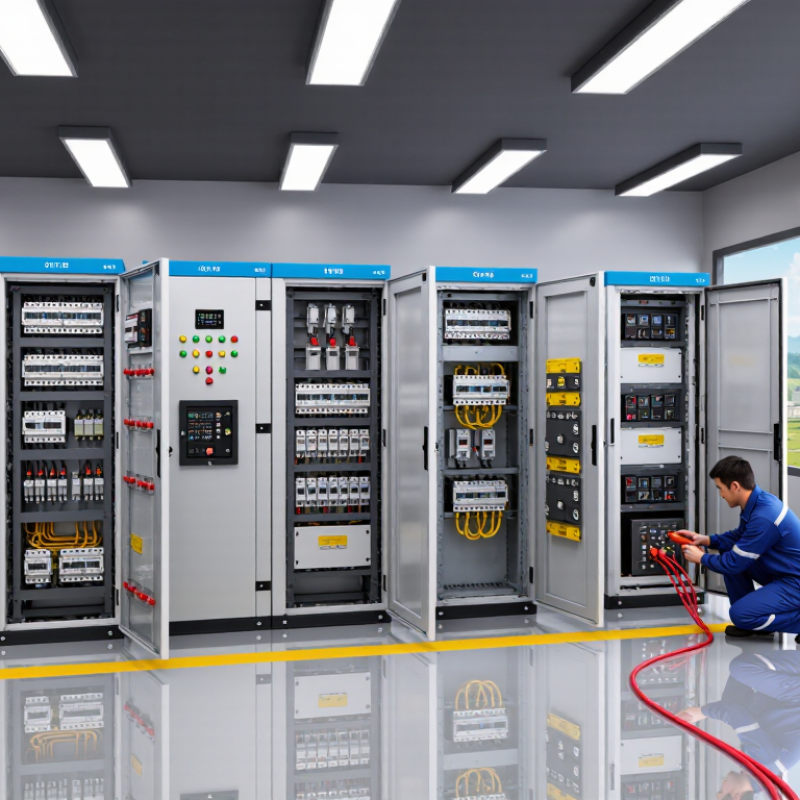
2026 Best Switchgear How to Choose the Right Type?

What Is Switchgear and Why Does Choosing the Right Type Matter?

Switchgear is an engineered assembly that controls, protects, and isolates electrical circuits. It may include circuit breakers, fuses, disconnectors, busbars, and protective relays. When a fault occurs, the equipment should interrupt current quickly and safely. It also allows technicians to isolate a section before inspection or repair. That practical function matters in factories, commercial buildings, data centers, and utility networks. One wrong selection can cause overheating, unnecessary outages, or dangerous arc-flash exposure.

Choosing the right type starts with real operating conditions, not only the rated voltage. Check continuous current, short-circuit withstand, switching frequency, installation altitude, humidity, dust, and available space. Low-voltage switchgear may suit a building distribution board, while medium- or high-voltage systems require more advanced insulation and protection coordination. Air-insulated designs are often easier to inspect. Gas-insulated designs can save space, but maintenance procedures and environmental requirements need careful review. Qualified engineers should verify applicable electrical standards, protection settings, testing records, and future load growth. A common mistake is selecting for today’s load only. It seems efficient, but expansion can expose weak points later.

Tips: Compare fault ratings, enclosure protection, maintenance access, and spare-part availability. Ask for routine test reports and clear wiring diagrams. Leave room for safe cable bending. Small details matter. I would also review the final choice with site technicians, because drawings rarely show every practical constraint.

Which Switchgear Types Suit Different Voltage and System Requirements?

2026 Best Switchgear: How to Choose the Right Type?

Which Switchgear Types Suit Different Voltage and System Requirements?

Choosing switchgear starts with voltage, but voltage alone is not enough. Low-voltage systems often use air circuit breakers or molded-case breakers. Medium-voltage networks may require vacuum circuit breakers in metal-enclosed panels. High-voltage installations need stronger insulation coordination and carefully tested interruption systems. Always verify rated voltage, continuous current, short-circuit withstand, and breaking capacity against the latest IEC or IEEE requirements.

System conditions also shape the choice. Air-insulated switchgear suits facilities with available space and accessible maintenance areas. Gas-insulated designs save space, but they demand tighter manufacturing control and specialized servicing. Ring main units can support compact distribution networks, while motor-control switchgear needs frequent switching and reliable overload protection. Outdoor equipment must tolerate rain, dust, temperature changes, and coastal corrosion. Field commissioning often reveals details missing from a specification sheet, such as cable bending limits or poor access for testing.

Tips: Ask for fault-current studies, protection coordination, arc-flash evaluation, and routine test records. Check spare-part availability and technician training before purchase. A lower initial price may create higher maintenance costs. A tidy selection table can still mislead. Review the site drawings with an experienced engineer, and leave room for future load growth.

2026 Best Switchgear: How to Choose the Right Type? Which Switchgear Types Suit Different Voltage and System Requirements?
Switchgear Type Typical Voltage Class Typical Current Rating Common Interrupting Medium Installation and Enclosure Best-Fit Applications Main Selection Advantages Important Selection Considerations
Low-Voltage Air Circuit Breaker (ACB) Switchgear Up to 1,000 V AC Typically 800–6,300 A for main distribution sections Air Indoor or outdoor metal-enclosed assemblies; fixed or withdrawable breakers Main incoming feeders, low-voltage distribution boards, large commercial buildings, industrial plants and generator paralleling systems High continuous-current capability, adjustable protection, easy inspection and suitable coordination with downstream devices Check short-circuit withstand, breaking capacity, selectivity, neutral protection, arc-flash risk and available installation space
Low-Voltage Molded-Case Circuit Breaker (MCCB) Switchgear Typically up to 1,000 V AC Typically 15–1,600 A Air Compact enclosed units installed in panels, motor control centers and distribution boards Feeder protection, motor circuits, lighting distribution, commercial facilities and small-to-medium industrial loads Compact size, comparatively simple installation, adjustable thermal-magnetic or electronic protection and broad feeder coverage Confirm voltage, interrupting rating, motor starting current, ambient temperature derating and coordination with upstream protection
Low-Voltage Motor Control Center (MCC) Typically up to 1,000 V AC Bus systems commonly rated up to approximately 6,300 A Air; contactors and circuit breakers provide switching and protection Metal-enclosed, compartmentalized, often with withdrawable motor starter units Process industries, water treatment, manufacturing lines, pumping stations and HVAC systems Centralized motor control, modular expansion, simplified maintenance and convenient integration of starters or variable-speed drives Evaluate motor starting method, short-circuit rating, heat dissipation, control voltage, enclosure rating and maintenance access
Medium-Voltage Vacuum Circuit Breaker (VCB) Switchgear Typically 3.6–36 kV Typically 630–4,000 A Vacuum interrupter Indoor or outdoor metal-clad or metal-enclosed construction; fixed or withdrawable breaker arrangements Utility substations, industrial plants, commercial medium-voltage distribution, transformers, motors and capacitor banks Long service life, low maintenance, no oil handling and effective switching for many medium-voltage applications Check rated short-circuit breaking current, transient recovery voltage, cable charging current, motor switching duties and protection coordination
Medium-Voltage Air-Insulated Switchgear (AIS) Typically 3.6–36 kV Typically 630–4,000 A Vacuum or air, depending on the switching device Metal-enclosed or metal-clad panels with air-insulated busbars and cable compartments Industrial substations, utility distribution networks, renewable-energy collector systems and large facilities Clear physical compartmentalization, accessible cable connections, familiar maintenance practices and flexible panel layouts Requires more space than gas-insulated designs; assess altitude, humidity, pollution level, internal arc classification and future extensions
Medium-Voltage Gas-Insulated Switchgear (GIS) Typically 3.6–36 kV Typically 630–3,150 A Vacuum interrupter with sealed gas-insulated bus and switching compartments Sealed, compact metal-enclosed construction for indoor or protected outdoor installations Urban substations, high-rise buildings, offshore facilities, data centers and locations with limited floor space Small footprint, high environmental protection and reduced exposure of energized components to dust, humidity and pollution Review gas-management requirements, accessibility, pressure monitoring, end-of-life procedures, cable interfaces and total lifecycle cost
Ring Main Unit (RMU) Typically 3.6–24 kV; some designs extend to 36 kV Typically 200–630 A for ring ways; transformer feeders may use separate ratings Vacuum or gas-insulated switching technology Compact sealed or semi-sealed metal-enclosed assembly with ring feeders and a transformer feeder Compact secondary substations, residential developments, commercial buildings, distribution networks and renewable-energy sites Compact network sectionalizing, high supply continuity and simple integration into transformer substations Confirm load-break and fault-interruption functions, remote-control capability, network earthing arrangement and cable termination compatibility
High-Voltage Gas-Insulated Switchgear (HV GIS) Above 36 kV; commonly used from approximately 72.5 kV upward Typically 1,250–4,000 A Vacuum or other approved interrupter technology with gas-insulated bus compartments Sealed metal-enclosed modules installed indoors or in compact substations Urban transmission substations, underground substations, offshore platforms, hydropower facilities and space-constrained sites Very compact layout, strong protection against environmental conditions and reduced land requirement Consider gas insulation management, leak monitoring, installation tolerances, specialized testing, transport limitations and lifecycle environmental requirements
High-Voltage Air-Insulated Switchgear (HV AIS) Above 36 kV; commonly used from approximately 72.5 kV upward Typically 1,250–4,000 A Breaker interrupter technology selected for the voltage class; air-insulated bus and disconnectors Outdoor open-air yard or indoor air-insulated arrangement with larger clearances Transmission substations, generating stations, large utility substations and sites with sufficient land availability Well-established layout, straightforward visual isolation, accessible equipment and generally lower initial equipment cost than GIS Requires more land and larger electrical clearances; evaluate pollution, altitude, wind, seismic conditions, noise and maintenance safety
Generator Switchgear Low voltage through medium voltage, commonly up to 36 kV Selected according to generator output; commonly 800–6,300 A on low-voltage systems Air at low voltage; vacuum commonly used at medium voltage Metal-enclosed switchboard or metal-clad medium-voltage assembly, often with synchronization and protection controls Standby power systems, cogeneration plants, renewable-energy plants and utility-scale generation Supports generator protection, synchronization, load sharing, bus transfer and controlled connection to the utility or facility network Verify generator subtransient reactance, fault contribution, synchronization scheme, neutral grounding, reverse power protection and black-start requirements
Automatic Transfer Switchgear (ATS) Commonly up to 1,000 V AC Typically 100–4,000 A Air; mechanically or electrically interlocked switching devices Enclosed low-voltage assembly with automatic controls and source interlocking Data centers, hospitals, emergency systems, commercial buildings and critical industrial loads Fast transfer between normal and alternate sources, improved continuity of supply and automated emergency operation Set transfer delay, retransfer delay, source compatibility, bypass-isolation needs, short-circuit rating and load-shedding logic
Selection note: The stated ratings are typical industry ranges rather than universal limits. Final selection should be verified against the applicable IEC or equivalent national standards, system fault level, continuous load, earthing method, environmental conditions, internal-arc requirements, protection coordination and future expansion plans.

How Do Safety, Performance, and Environmental Conditions Affect Selection?

Choosing the right switchgear begins with safety, not cabinet size or purchase price. Confirm the system voltage, continuous current, and short-circuit withstand rating. These values must match real operating conditions, not only design estimates. A qualified engineer should verify clearances, grounding, interlocks, and arc-flash controls against applicable standards, such as IEC 62271.

Performance depends on the load profile. Motors, transformers, and renewable sources can create different switching stresses. Frequent operation may require a mechanism designed for repeated duty. Sensitive facilities also need reliable protection coordination, so one fault does not shut down an entire distribution section. Field inspections should check hot spots, loose connections, insulation aging, and relay settings.

Environment changes the selection quickly. Dusty workshops may require a higher enclosure rating, while coastal sites need stronger corrosion protection. High altitude reduces insulation performance. Heat affects current capacity, and condensation can damage control circuits. Ask about humidity, pollution, vibration, and maintenance access. A sealed enclosure is not always better; trapped heat can shorten component life. This detail is easy to miss.

I have seen specifications copied from older projects without reviewing actual site conditions. That shortcut creates risk. Allow space for safe maintenance, cable bending, testing, and future expansion. Environmental data should come from the site, not guesswork. A small uncertainty deserves another measurement before the switchgear is ordered.

How Can Load, Space, Budget, and Future Expansion Guide Your Choice?

Choosing switchgear starts with the load, not the catalogue. Record continuous current, starting current, fault level, voltage, and duty cycle. A 1,600-ampere feeder may need different thermal and short-circuit performance from a similar-sized standby circuit. IEC 62271 requirements help verify rated voltage, insulation, temperature rise, and internal arc performance. Space matters too. Measure door clearances, cable-bending areas, ventilation paths, and maintenance access before selecting indoor or outdoor equipment.

Budget is not only the purchase price. Installation labor, civil work, testing, spares, downtime, and future maintenance can change the real cost. The Uptime Institute’s Annual Outage Analysis 2023 reported that 55% of surveyed outages cost more than $100,000. That figure makes protection, segregation, and maintainability difficult to dismiss. Still, an expensive configuration is not automatically safer. A poorly planned layout can make premium equipment inconvenient to service.

Future expansion deserves a reserved space and a realistic load forecast. The International Energy Agency’s Electricity 2024 report expects global electricity demand to grow by about 4% annually through 2026. Leave practical capacity in busbars, feeders, protection settings, and cable routes. Spare cubicles help, but unused capacity also raises cost and footprint. A perfect choice is rare. Recheck the forecast, because early assumptions are often wrong. Space is unforgiving.

2026 Best Switchgear: How to Choose the Right Type

Compare common switchgear options using typical engineering characteristics. The planning scores reflect representative applications and should be verified against the required voltage, fault level, enclosure rating, installation conditions, and local electrical codes.

Low-voltage switchboards generally suit buildings and industrial distribution up to 1,000 V AC. MCCs are optimized for motor-intensive facilities, while medium-voltage metal-clad switchgear and ring main units are used for distribution systems above 1 kV. Higher scores indicate stronger suitability for the stated factor: load capacity, space efficiency, budget control, and future expansion.

Which Standards, Tests, and Maintenance Factors Should You Verify?

Choosing switchgear in 2026 requires more than comparing voltage ratings and enclosure sizes. Verify which standards apply to your installation, such as IEC 62271 or IEEE C37 requirements. Local electrical codes may add stricter conditions. Check rated voltage, short-circuit withstand, service continuity, and internal arc classification. A suitable design should match the site’s load, fault level, altitude, humidity, and available working space.

Request documented factory and site tests. Important checks include insulation resistance, power-frequency withstand, contact resistance, and mechanical operation. Protection relays need secondary injection testing, while current transformers require ratio and polarity verification.

Partial-discharge testing can reveal insulation weaknesses before failure. Review calibration certificates and acceptance limits, not only pass or fail results. Small gaps matter.

Maintenance planning should reflect real operating conditions. Inspect busbar joints for heat damage, measure connection torque, and use infrared scanning under normal load. Clean dust from insulation surfaces, but avoid creating static or moisture problems. Test interlocks and shutters during each service visit.

Keep dated records with measured values and corrective actions. Field experience shows that a clean report can still hide rushed workmanship. One overlooked loose terminal may become tomorrow’s outage.

Maintenance intervals should be adjusted after pollution, condensation, repeated trips, or abnormal temperature readings. If access is difficult, the design may be technically correct yet impractical to maintain.

FAQS

What should be checked before selecting switchgear?

Confirm system voltage, continuous current, and short-circuit withstand requirements. These values must reflect actual operating conditions. A qualified engineer should verify clearances, grounding, interlocks, and arc-flash controls.

How does the load profile affect switchgear selection?

Motors, transformers, and renewable sources create different switching stresses. Frequent operation may require a mechanism designed for repeated duty. Protection coordination should prevent one fault from shutting down an entire distribution section.

Which environmental conditions can change the equipment choice?

Dust, salt air, heat, humidity, altitude, vibration, and condensation all matter. Coastal locations need stronger corrosion protection. High altitude can reduce insulation performance. Heat may reduce current capacity.

Is a sealed enclosure always the best option?

Not necessarily. A sealed enclosure can trap heat and shorten component life. Dusty areas may need higher protection, but ventilation and temperature control still require review.

What installation space should be planned?

Leave room for safe maintenance, cable bending, testing, and future expansion. Crowded cabinets may work initially but become difficult to inspect. I might underestimate this space during early design.

Which factory and site tests are important?

Request documented insulation, power-frequency, contact-resistance, and mechanical-operation tests. Protection relays need secondary injection testing. Current transformers require ratio and polarity checks. Review calibration certificates and acceptance limits.

How should switchgear maintenance be organized?

Inspect busbar joints for heat damage and verify connection torque. Use infrared scanning under normal load. Test interlocks and shutters during service visits. Keep dated records of measurements and corrective actions.

When should maintenance intervals be changed?

Adjust intervals after pollution, condensation, repeated trips, or abnormal temperature readings. A clean report can still hide rushed workmanship. One loose terminal can cause tomorrow’s outage.

Conclusion

Choosing the right switchgear is essential for protecting electrical systems, ensuring reliable power distribution, and supporting safe operation. This guide explains how to choose the right switchgear by comparing low-, medium-, and high-voltage types according to system voltage, fault levels, load characteristics, and operational requirements. It also considers the differences between air-insulated, gas-insulated, and other configurations, helping users match equipment to indoor, outdoor, industrial, commercial, or challenging environmental conditions.

The selection process should also account for safety features, performance requirements, available installation space, total budget, and future capacity expansion. Buyers should verify compliance with applicable electrical standards, inspection procedures, routine and type-test documentation, protection functions, and maintenance access. By evaluating present needs alongside long-term reliability, environmental exposure, serviceability, and lifecycle costs, users can select switchgear that delivers dependable protection and efficient system performance.

Ethan

Ethan

Ethan is a seasoned marketing professional with a deep expertise in our company's innovative product line. With a passion for sharing knowledge and insights, he takes the lead in regularly updating our corporate blog, where he explores industry trends, product features, and effective marketing......